
Post
The Ultimate Guide to Graphics Power of NVIDIA GeForce RTX 6090
May
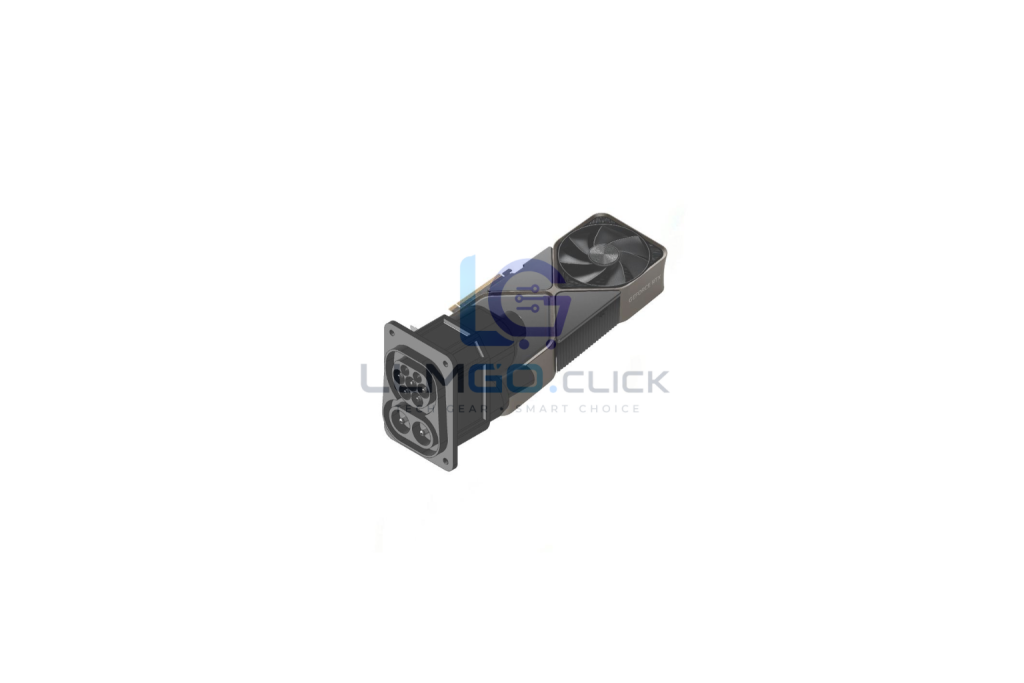
Graphics Power of NVIDIA GeForce RTX 6090
The graphics card industry continues to evolve rapidly as gamers, creators, developers, and AI professionals demand increasingly powerful hardware capable of handling next-generation workloads. Over the years, NVIDIA has maintained a dominant position in the high-performance GPU market through innovations in ray tracing, artificial intelligence acceleration, DLSS technology, and advanced GPU architectures. As speculation grows around the future of NVIDIA’s next-generation flagship GPU, the rumored NVIDIA GeForce RTX 6090 has become one of the most discussed topics in the PC hardware industry.
Although NVIDIA has not officially confirmed the RTX 6090, numerous industry reports, leaks, and enthusiast discussions suggest that the future RTX 60-series could represent one of the largest generational leaps in graphics technology. The rumored RTX 6090 is expected to deliver massive improvements in gaming performance, AI acceleration, ray tracing, rendering power, and efficiency compared to previous flagship GPUs such as the RTX 4090 and RTX 5090. (TechSpot)
This article explores the expected graphics power of the RTX 6090, including architecture advancements, gaming performance, AI capabilities, ray tracing improvements, cooling demands, and its potential impact on the future of high-end computing. Graphics Power of NVIDIA GeForce RTX 6090
The Evolution of NVIDIA Flagship GPUs
NVIDIA’s flagship GPUs have historically defined the cutting edge of gaming and graphics technology. Graphics Power of NVIDIA GeForce RTX 6090
Previous generations introduced major innovations:
- GTX 1080 introduced strong Pascal efficiency
- RTX 2080 introduced ray tracing
- Graphics Power of NVIDIA GeForce RTX 6090
- RTX 3090 expanded creator-focused VRAM capacity
- RTX 4090 dramatically increased AI and rendering performance
- RTX 5090 continued advancing ray tracing and AI-assisted graphics
Each generation pushed gaming realism and computational power further.
The rumored RTX 6090 is expected to continue this progression by introducing NVIDIA’s next-generation Rubin architecture, potentially manufactured using advanced 3nm technology from TSMC. (Hardware News)
Industry rumors suggest that NVIDIA is focusing heavily on AI-enhanced rendering, neural graphics technologies, and improved efficiency rather than relying solely on brute-force increases in CUDA cores. (TechSpot) Graphics Power of NVIDIA GeForce RTX 6090
Expected Rubin Architecture
The RTX 6090 is widely rumored to use NVIDIA’s Rubin GPU architecture, which would succeed the Blackwell generation.
Rubin is expected to focus on:
- Advanced AI acceleration
- Improved ray tracing efficiency
- Neural rendering
- Graphics Power of NVIDIA GeForce RTX 6090
- Better power efficiency
- Higher clock speeds
- Enhanced tensor core performance
According to multiple leaks, Rubin-based GPUs may deliver significantly stronger AI processing capabilities compared to earlier architectures. (Tom’s Hardware)
The architecture may also include:
- More advanced tensor cores
- New RT core designs
- Faster memory controllers
- Improved scheduling systems
- Better cache structures
Rather than massively increasing raw shader counts, NVIDIA may prioritize intelligent rendering systems and AI-assisted graphics processing.
Massive Gaming Performance Potential
Gaming performance is expected to be one of the RTX 6090’s strongest advantages.
Industry speculation suggests performance gains could range from:
- 25% to 50% in traditional rasterized gaming
- Graphics Power of NVIDIA GeForce RTX 6090
- Up to 80% or more in AI-enhanced ray tracing scenarios
depending on software optimization and DLSS implementation. (Tom’s Hardware)
The RTX 6090 is expected to target:
- Native 4K ultra gaming
- High-refresh-rate 4K esports
- 8K gaming
- VR experiences
- Graphics Power of NVIDIA GeForce RTX 6090
- Advanced ray tracing environments
Modern AAA games are becoming increasingly demanding, especially with cinematic lighting, complex physics systems, and large open-world environments. Graphics Power of NVIDIA GeForce RTX 6090
The RTX 6090 could provide enough graphical power to handle these workloads smoothly while maintaining high frame rates and advanced visual settings. Graphics Power of NVIDIA GeForce RTX 6090
Ray Tracing Advancements
Ray tracing has become one of NVIDIA’s most important technologies.
Current RTX GPUs already deliver impressive real-time lighting, reflections, shadows, and global illumination. However, fully path-traced games still require extremely powerful hardware. Graphics Power of NVIDIA GeForce RTX 6090
The RTX 6090 is expected to push ray tracing significantly further. Graphics Power of NVIDIA GeForce RTX 6090
Leaks suggest that the new RT cores may dramatically improve:
- Real-time reflections
- Path tracing
- Dynamic global illumination
- Graphics Power of NVIDIA GeForce RTX 6090
- Ambient occlusion
- Complex lighting calculations
This could allow future games to achieve movie-quality visual realism in real time.
Developers are increasingly designing games around advanced lighting systems, making stronger ray tracing performance increasingly important.
DLSS 5 and Neural Rendering
One of the most exciting rumors surrounding the RTX 6090 involves the possible introduction of DLSS 5 and advanced neural rendering systems.
DLSS (Deep Learning Super Sampling) already uses AI to upscale images and improve frame rates while preserving visual quality.
Graphics Power of NVIDIA GeForce RTX 6090
Future DLSS technologies may go much further by:
- Reconstructing larger portions of rendered frames
- Replacing traditional rendering pipelines
- Predicting visual elements using AI
- Generating enhanced lighting and textures
Reports suggest DLSS 5 could potentially double performance in supported titles compared to earlier DLSS implementations. (YouTube)
Neural rendering may become a defining feature of future gaming graphics.
Instead of rendering every pixel traditionally, AI systems could intelligently generate portions of scenes, reducing GPU workload while increasing realism.
The RTX 6090 is expected to be heavily optimized for these AI-assisted graphics technologies. Graphics Power of NVIDIA GeForce RTX 6090
AI and Machine Learning Power
Modern GPUs are no longer limited to gaming.
AI workloads have become one of the most important areas of GPU development.
The RTX 6090 is expected to offer massive improvements in:
- AI image generation
- Machine learning
- Graphics Power of NVIDIA GeForce RTX 6090
- Local LLM processing
- AI-assisted productivity
- Video enhancement
- Scientific computing
Tensor core advancements could dramatically increase AI inference speed and model processing efficiency.
This would make the RTX 6090 attractive not only to gamers but also to:
- Developers
- Researchers
- AI enthusiasts
- Content creators
- Graphics Power of NVIDIA GeForce RTX 6090
- Engineers
As AI software becomes more integrated into everyday computing, GPUs with strong AI acceleration become increasingly valuable.
VRAM and Memory Bandwidth
Memory capacity is another area where the RTX 6090 may improve significantly.
Rumors suggest configurations could include:
- 32GB or more of GDDR7 memory
- Graphics Power of NVIDIA GeForce RTX 6090
- Extremely high memory bandwidth
- 512-bit memory interfaces
These improvements would support:
- 8K gaming
- Massive AI models
- Complex rendering workloads
- Professional content creation
- Advanced simulation environments
High VRAM capacity is becoming increasingly important as games and creative applications continue increasing in complexity. Graphics Power of NVIDIA GeForce RTX 6090
Modern game textures, ray tracing data, and AI systems consume enormous amounts of VRAM. Graphics Power of NVIDIA GeForce RTX 6090
Future workloads may require even larger memory capacities. Graphics Power of NVIDIA GeForce RTX 6090
Power Consumption and Cooling Challenges
One major challenge for ultra-high-end GPUs is power consumption. Graphics Power of NVIDIA GeForce RTX 6090
The RTX 6090 is rumored to potentially consume:
- 500W to 600W or more
- Graphics Power of NVIDIA GeForce RTX 6090
depending on final specifications and board designs. (YouTube)
This would require:
- High-capacity power supplies
- Advanced cooling systems
- Improved case airflow
- Enhanced motherboard power delivery
Many enthusiasts expect flagship RTX 6090 systems to rely heavily on:
- Large vapor chamber coolers
- Triple or quad-fan systems
- Custom liquid cooling
Thermal engineering will become increasingly important as GPU performance scales higher.
Despite high power requirements, rumors suggest Rubin architecture may still improve overall efficiency compared to previous generations. (Hardware News)
Creator and Professional Workloads
The RTX 6090 is expected to be extremely powerful for content creation.
Creative professionals working in:
- 3D rendering
- Video editing
- Animation
- Unreal Engine
- AI-generated content
- VFX production
could benefit enormously from increased GPU acceleration.
Modern creative software increasingly uses GPU processing for:
- Real-time previews
- Rendering
- Simulation
- AI enhancement
- Encoding
Large VRAM capacity and advanced tensor performance would help creators handle more complex projects efficiently.
Virtual Reality and Mixed Reality
Virtual reality gaming and mixed reality applications require enormous graphical power.
High refresh rates and low latency are essential for smooth VR experiences.
The RTX 6090 could become one of the first GPUs truly capable of:
- Advanced VR path tracing
- Ultra-high-resolution VR
- AI-enhanced VR rendering
- Mixed reality simulations
As VR technology evolves, stronger GPUs become critical for delivering immersive experiences without motion sickness or performance instability.
Competitive Landscape
AMD and Intel continue competing in the GPU market, but NVIDIA remains dominant in high-end graphics technology.
Reports suggest AMD may attempt to challenge the RTX 6090 with future RDNA 5 flagship GPUs. (TechRadar)
However, NVIDIA’s advantage in:
- AI technologies
- DLSS ecosystem
- Ray tracing
- Software optimization
continues strengthening its position in the premium GPU market. Graphics Power of NVIDIA GeForce RTX 6090
The RTX 6090 is expected to reinforce NVIDIA’s leadership in enthusiast graphics performance. Graphics Power of NVIDIA GeForce RTX 6090
Delays and Market Uncertainty
Despite growing excitement, the RTX 6090 remains unofficial.
Several reports suggest that NVIDIA’s RTX 60-series launch timeline may be delayed due to:
- Memory shortages
- AI market prioritization
- Manufacturing constraints
Some sources speculate that RTX 60-series gaming GPUs may not arrive until 2027 or even 2028. (Tom’s Hardware)
NVIDIA’s increasing focus on AI enterprise hardware may also influence consumer GPU release schedules.
Because of this uncertainty, all current RTX 6090 specifications remain speculative.
Enthusiast Community Reactions
The PC enthusiast community has shown massive interest in RTX 6090 rumors. Graphics Power of NVIDIA GeForce RTX 6090
Discussions often focus on:
- Expected performance gains
- Power consumption
- Pricing concerns
- VRAM capacity
- DLSS improvements
Some enthusiasts expect revolutionary gains, while others remain cautious about realistic performance scaling. (Reddit)
Pricing is also a major concern.
Many expect the RTX 6090 to become one of the most expensive consumer GPUs ever released, potentially exceeding $2,000 or more depending on final configurations. (YouTube)
Current High-End Alternatives
Until the RTX 6090 officially arrives, current flagship GPUs remain the strongest options for enthusiasts. Graphics Power of NVIDIA GeForce RTX 6090
Best current flagship GPU
Strong previous-generation option
| Attribute | ASUS ROG Astral GeForce RTX 5090 Dhahab OC Edition | ASUS GeForce RTX 4090 Republic Of Gamers BTF OC Graphics Card |
|---|---|---|
| GPU generation | RTX 50 series | RTX 40 series |
| AI acceleration | Advanced | Very strong |
| Ray tracing | Next-gen RT cores | Excellent RT performance |
| VRAM | 32GB GDDR7 | 24GB GDDR6X |
| Target gaming | 4K/8K ultra gaming | 4K ultra gaming |
| Creator workloads | Exceptional | Excellent |
| Power demands | Extremely high | Very high |
| Best use case | Future-focused flagship builds | High-end enthusiast systems |
Conclusion
The rumored NVIDIA GeForce RTX 6090 could represent one of the most powerful consumer graphics cards ever created. Expected advancements in AI acceleration, ray tracing, neural rendering, DLSS technology, and memory performance may redefine what is possible in gaming and professional graphics workloads.
If current rumors prove accurate, the RTX 6090 could deliver massive gains in:
- 4K and 8K gaming
- AI-assisted rendering
- Content creation
- Machine learning
- Virtual reality
- Real-time path tracing
However, the GPU also faces challenges related to:
- Power consumption
- Cooling requirements
- Manufacturing costs
- Market availability
Until NVIDIA officially reveals the RTX 6090, many specifications remain speculative. Still, industry leaks and architectural trends strongly suggest that the future of graphics technology will rely increasingly on AI-enhanced rendering and intelligent computing systems.
The RTX 6090 may ultimately become not only a gaming GPU but also a central platform for the next era of AI-powered computing and immersive digital experiences. (TechSpot) link.site
